For many years, man has been taking advantage of the activities of millions of microorganisms found in the soil to improve agricultural productivity. With the large scale cultivation of microbes or other single cells, occurring with or without air – known as microbial fermentation -man has used naturally occurring organisms to develop bio fertilizers and biopesticides to assist plant growth and control weeds, pests, and diseases, respectively.
Many of the microorganisms that live in the soil actually help plants absorb more nutrients than they would by themselves. Plants and these friendly microbes are involved in “nutrient recycling”. The microbes help the plant to “take up” essential energy sources. In return, plants donate their waste byproducts for the microbes to use for food. Because the microbes have helped plants digest more nutrients, plants develop stronger and bigger root systems. The larger the plants’ roots, the more living space and food there is for the microbes to enjoy. Scientists use these friendly microorganisms to develop bio fertilizers.
BIO FERTILIZERS:
An example of an organism that is used to make bio fertilizers is the bacterium Rhizobium. This bacterium lives on the plant’s roots in cell collections called nodules. The nodules are biological factories that can take nitrogen out of the air and convert it into an organic form that the plant can use. Because the bacteria live within the roots, it transfers the nutrient directly into the plant. This fertilization method has been designed by nature. With a large population of the friendly bacteria on its roots, the legume can use naturally-occurring nitrogen instead of the expensive traditional nitrogen fertilizer.Bio fertilizers help plants use all of the food available in the soil and air thus allowing farmers to reduce the amount of chemical fertilizers they use. This helps preserve the environment for the generations to come.
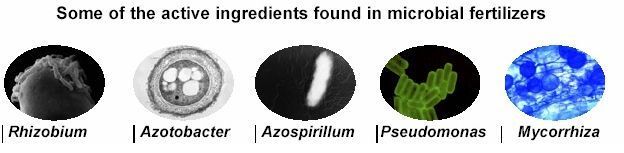
The mycorrhizal fungi that colonizes the roots of plants prevent further infections by pathogens and make plants more tolerant to drought and heavy metals. BIO-Quick, a composting inoculum, helps hasten the decomposition of farm and agro-industrial wastes by as much as 80%.
BIO PESTICIDES:
As we all know, there are also microorganisms found in the soil that are not so friendly to plants. These pathogens can cause extreme disease or damage to the plant. As with friendly microorganisms, scientists have developed biological “tools” which use these disease-causing microbes to control weeds and pests naturally.
Bio herbicides:
Weeds are a constant problem for farmers. They not only compete with crops for water, nutrients, sunlight, and space but also harbor insect and disease pests; clog irrigation and drainage systems; undermine crop quality; and deposit weed seeds into crop harvests. If left uncontrolled, weeds can reduce crop yields significantly. The use of bioherbicides is another way of controlling weeds without environmental hazards posed by synthetic herbicides. Bio herbicides are made up of microorganisms (e.g. bacteria, viruses, fungi) and certain insects (e.g. parasitic wasps, painted lady butterfly) that can target very specific weeds. The microbes possess invasive genes that can attack the defense genes of the weeds, thereby killing it. The better understanding of the genes of both microorganisms and plants has allowed scientists to isolate microbes (pathogens) whose genes match particular weeds and are effective in causing a fatal disease in those weeds.
Bioherbicides deliver more of these pathogens to the fields. They are sent when the weeds are most susceptible to illness. The genes of disease-causing pathogens are very specific. This selective response makes bioherbicides very useful because they kill only certain weed plants that interfere with crop productivity without damaging the crop itself. Bioherbicides can target one weed and leave the rest of the environment unharmed. The benefit of using bioherbicides is that it can survive in the environment long enough for the next growing season where there will be more weeds to infect. It is cheaper compared to synthetic pesticides thus could essentially reduce farming expenses if managed properly. It is not harmful to the environment compared to conventional herbicides and will not affect non-target organisms. With the advances of genetic engineering, new generation bioherbicides are being developed that are more effective against weeds. Microorganisms are designed to effectively overcome the weed’s defenses. Weeds have a waxy outer tissue coating the leaves that microorganisms have to penetrate in order to fully infect the weeds. Through biotechnology, these microorganisms will be able to produce the appropriate type and amount of enzymes to cut through the outer defenses. Streamlining of the microbe’s plant host specificity will ensure that the weeds are taken out and not the crops. On the other hand, microbes can also be made to be effective against several host weeds and not only to one type of weed as this can be too expensive to produce for commercial use.
Bio insecticides:
The science of biotechnology can also help in developing alternative controls to synthetic insecticides to fight against insect pests. Research has found microorganisms in the soil that will attack fungi, viruses or bacteria which cause root diseases. Formulas for coatings on the seed (inoculants) which carry these beneficial organisms can be developed to protect the plant during the critical seedling stage. They are very specific, often affecting only a single species of insect and have a very specific mode of action; slow in action and the timing of their application is relatively critical. Some of these characteristics however, are seen by critics as a disadvantage. For example, because most of these bioinsecticide agents are living organisms, their success is affected by several factors like temperature, pH, moisture, UV, soil conditions, and other microbial competitors present in the environment. Slow in action means much longer time for it to eradicate pathogens compared to synthetic pesticides.
Bacteria-based bio insecticides:
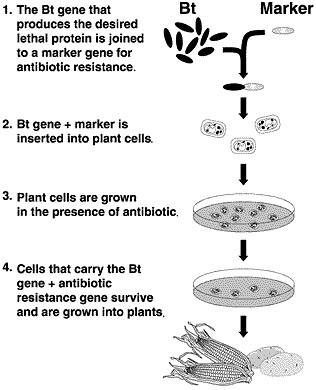
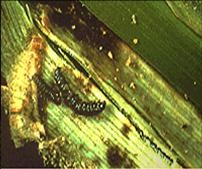
One of the most widely used bioinsecticides is a naturally occurring soil bacterium called Bacillus thuringiensis or Bt. Bt produces a protein which is poisonous to insects. Often within 15 minutes of being eaten, the poisons begin to create ulcers in the insect’s stomach lining. The insect stops eating and eventually dies. Researchers have identified between 500 and 600 strains, or types of Bacillus thuringiensis. Bt is very selective — it affects only a specific species of insect pest and does not harm humans, birds, fish, or beneficial insects. In 1983, a strain of Bt was used in West Africa to wipe out disease-carrying black flies.
 |  |
Fungi-based bio insecticides:
Fungi that cause disease in some 200 different insects are gaining prominence as bioinsecticides. One of the earliest to be discovered in the 1880s is Beauveria bassiana (Bb), a fungus found worldwide in soils and plants. Another half a dozen fungi are also known to have characteristics valuable for insect control. In China, over two million hectares are sprayed with Bb annually to control forestry pests.
Inexpensive fermentation technology is used to mass produce fungi. Spores are harvested and packaged so they can be applied to insect-ridden fields. When the spores are applied, they use enzymes to break through the outer surface of the insects’ bodies. Once inside, they begin to grow and eventually cause death. Bio insecticides based on Bb have many advantages. The fungus does not grow in warm-blooded organisms (such as people), nor does it survive long in water reservoirs or rivers. However, its spores can withstand long periods of dryness and other harsh environmental conditions. Studies to date have shown that the fungus also does not hurt plants and becomes inactivated by the sun’s ultraviolet rays in one to eight weeks. Fungal agents are viewed by some researchers as having the best potential for long-term insect control. This is because these bioinsecticides attack in a variety of ways at once, making it very difficult for insects to develop resistance.
Virus-Based Bio insecticides:
A group of virus-based insecticides that scientists are testing are the rod shaped baculoviruses. Baculoviruses affect insect pests like corn borers, potato beetles, flea beetles and aphids. Example are Nuclear Ploly Hydrosis Virus (NPV) which affects lepidopteran larvae.
